Wednesday, February 2, 2011

New Digital Collection: Farms of Cannon County, Tennessee

MTSU's Walker Library has collaborated with the Arts Center of Cannon County to develop a new digital collection: Farms of Cannon County, Tennessee.

Ben Freeze checking his crop of sudan grass (1965)


This collection consists primarily of black-and-white photographs taken by Mr. William L. Clement, District Conservationist for the United States Soil Conservation Service in Cannon County, Tennessee from 1950 to the mid-1970s. Mr. Clement was a capable and consistent photographer of all aspects of his work in Cannon County. He carefully depicted the farmers who worked the land, the land itself, the crops that were grown and the equipment that was used. In the process he frequently captured images of home and community life and of the changing landscape of the county.

More than 400 images are included in the collection. The earliest is dated 1944 and latest is dated 1973, rounding out three full decades. Most were taken by Mr. Clement but nine were taken during the 1940s by his predecessors and others were taken by his assistants, often with Mr. Clement as a subject. These 400 were selected from more than 1000 images that were given by Mr. Clement to the Arts Center of Cannon County.

In addition to multiple search and browse options, the site has a image "slider" (or carousel) that presents highlights from the collection:
  • Photos of Mr. Clement and an oral history interview (audio) in which he discusses teaching in the farm training program for veterans, his work as a district conservationist in Cannon County, and a host of farming topics (tobacco farming, soil types, introducing new crops, no-till farming, etc.).
  • Tobacco farming - photos and a clip from the oral history interview.
  • Information about Cannon County "Century Farms" that are represented in the digital collection. Tennessee Century Farms,  (http://www.tncenturyfarms.org), a program of MTSU's Center for Historic Preservation, recognizes and documents the contributions of families who have owned and farmed the same land in the state for at least 100 years.

Wednesday, November 17, 2010

In the News: Civilian Conservation Corps Musuem

TN Civilian Conservation Corps museum opens (Tennessean, Nov. 8, 2010)


Volunteer Voices includes 66 photographs and documents from the Civilian Conservation Corps collection (Tennessee State Library and Archives).
Otto F. Haslbauer, Photographer; Planting seedlings on a slope, Abe Kennerly in foreground (Tennessee State Library and Archives)

 The CCC is also featured on the Today's Document from the National Archives.

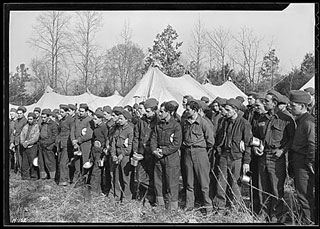
"Newly-arrived replacements at CCC Camp, TVA #22, near Esco, Tennessee, lined up before their first meal in camp..." 11/17/1933. Lewis Hine, Photographer (ARC Identifier: 532780);


Wednesday, April 28, 2010

TeVA (Tennessee Virtual Archive) Update

TSLA's redesigned TeVA site now includes 27 digital collections. Six of these collections document various aspects of the Civil War: soldiers, civilian life, maps from the Western Theater, Civil War visual culture, Reconstruction and the African American legacy in Tennessee, and the "Lost Cause" in Southern Memory.

Tuesday, March 2, 2010

TEVA: Throwaway History: The Broadside in American Culture


TSLA has added Throwaway History to TeVA (Tennessee Virtual Archive). The 90 broadsides in the collection include announcements of official proclamations, public meetings, and entertainment events. The collection was featured in the February 26 edition of the Scout Report.

Tuesday, November 24, 2009

Happy Thanksgiving!


Camp Tenn., TVA 29 Thanksgiving, 1935, Menu and Roster
This souvenir program is for the Thanksgiving dinner in 1935 of the 496th C.C.C. Company in Lexington, Tennessee. The menu shows a traditional turkey dinner. Several state or regional dishes are included: Louisiana oyster dressing, Georgia candied yams, Delaware cranberry sauce, Colonial mince meat pie, Florida fruit salad, Midwest caramel nut ice cream. The menu also lists Hava Tampa cigars, cigarettes and mints. The recipient of the menu wrote in "matches" as well. The program contains a two page roster of the officers, leaders and members of the 496th C.C.C Company.

Thursday, June 18, 2009

Civil War Diary

See the article in Knoxnews.com about the Civil War diary that UT-Knoxville Libraries has digitized. You can view the manuscript of the The Henry Pippitt Diaries - 1862-1865
at http://dlc.lib.utk.edu/pippitt/pippitt.html

Monday, December 8, 2008

The State of the Union

Carlisle, Jennifer. "The State of the Union: A History of the Labor Movement at Vanderbilt University." Vanderbilt Undergraduate Research Journal [Online] Vol. 1, No. 0 (10 May 2005) Available: http://ejournals.library.vanderbilt.edu/vurj/viewarticle.php?id=7.

Abstract:
This article will document the historical context of the labor movement at Vanderbilt University in order to explain the nature and interaction of the labor union with central administration over the past forty years. Recognizing the lack of scholarly attention to the labor movement in Paul Conkin’s Gone with the Ivy (1985) and Peabody College (2002) and Dale Johnson’s Vanderbilt Divinity School (2001), the author contributes to the academic literature by providing a broad overview of the historical background and current state of the labor movement. As the largest employer in Davidson County and a major contributor to the state of Tennessee’s economic development, the relationship of University administrators and labor representatives has a large impact on the condition of surrounding labor movements, particularly in the city of Nashville’s low-wage service workers sector. In providing a brief chronological synopsis of the labor movement and the role of female involvement in the union, the author concludes by providing a context for contemporary labor negotiations.

Expansionism, Slavery, and Sectionalism

Fotouhi, David. "Expansionism, Slavery, and Sectionalism: James K. Polk and American Enlargement under the Fluctuating Forces of Manifest Destiny." Vanderbilt Undergraduate Research Journal [Online] Vol. 2, No. 0 (12 August 2006) Available: http://ejournals.library.vanderbilt.edu/vurj/viewarticle.php?id=55.

Abstract:
This article explores the relationship between President James K. Polk’s progressive ambition in the national electorate and the geographic expansion of the United States, particularly with regard to the social and religious foundations for manifest destiny in the public conscience. The author finds that manifest destiny played a central role in President James K. Polk’s successful campaign for the White House as well as his handling of foreign and domestic affairs.

They Moved the Earth

Broderick IV, Thomas. "They Moved the Earth: The Slaves Who Built the Tennessee State Capitol." Vanderbilt Undergraduate Research Journal [Online] Vol. 4, No. 0 (3 June 2008) Available: http://ejournals.library.vanderbilt.edu/vurj/viewarticle.php?id=95.

Abstract:
By utilizing primary and secondary source material, this essay attempts to examine both the use of slavery during the construction of the Tennessee State Capitol and the lives of the slaves involved. Though written histories on the Capitol agree that slavery was used at the construction site, no further details are given. The goal of this essay is to bring to light the full story of the group of slaves that were involved in the construction. In the spring of 1846, fifteen slaves, all men, were loaned to the state government by A.G. Payne, a Nashville stone mason. For nearly a year they carved out the Capitol’s cellar, their skilled labor worth nearly twice as much as the unskilled labor of free men. These slaves broke through tons of limestone rock, carting it away after digging. When construction required skilled stonemasons, the slaves returned to their master’s properties. For fourteen years up until Payne’s death, they worked at both a farm and brick factory, the monotony briefly punctuated by being hired out. Due to debts incurred by Payne just before his death, the slaves were to be sold. The Civil War imminent, the slaves remained with Payne’s widow until their emancipation. After emancipation, the records on all but three of the men stop completely. Out of the three remaining men, the children of one were prospering. They had been taught to read. The government their father had helped physically build was finally working for their interests.


Thursday, October 23, 2008

Political campaigns

Governor for All Tennessee, It Has to Be Dunn (Albert Gore Research Center)

Have political campaigns changed? Check out the campaign brochures and letters in Volunteer Voices for a historical perspective.
See campaign brochures for Shelton Edwards (1948), Frank Clement (1952), John Bragg (1968), Bill Brock (1970), and Ben Hall McFarlin (1976). Correspondence also documents elections at the state and national levels. In one letter from 1884, Church Howe asks for O.P. Temple's help and advice in making Tennessee vote Republican.

Tuesday, May 20, 2008

Scopes Trial

Volunteer Voices includes music scores from the Center for Popular Music (MTSU), documents and photographs from the Tennessee State Library and Archives, as well as photographs from Bryan College and the University of Tennessee Libraries. View Scopes Trial items.

Image caption: Monkey-Biznizz (Center for Popular Music, MTSU)

Learn more:
Scopes Trial (Tennessee Encyclopedia of History and Culture)

Monday, April 7, 2008

Rosenwald Schools

More than 5,300 Rosenwald schools and auxiliary buildings were constructed between 1912 and 1932. A recent article in USA Today, Partnership to preserve places of black opportunity
notes the historical significance of these schools. The article also highlights a joint initiative by National Trust for Historic Preservation and Lowe's to restore 17 Rosenwald schools, including two schools (Gallatin and Pikeville) in Tennessee.


Image credit: Ingram Rosenwald School (Tennessee State Library and Archives)

Early 20th Century Schoolhouses
(TeVA, Tennessee State Library and Archives) includes a selection of photographs of Rosenwald schools and other rural schools in Tennessee. Interested in learning more about Rosenwald schools? Check out Mary Hoffschwelle's book, The Rosenwald Schools of the American South (University Press of Florida, 2006).

40th Anniversary of Martin Luther King's Death

The Memphis Commercial Appeal's excellent web site, Dr. Martin Luther King, Jr. - 1968, includes the newspaper's stories and photographs from 1968 that document the sanitation worker's strike, King's assassination, memorial service, and efforts by the National Guard to restore peace.
Volunteer Voices includes 75 photos from the 1968 Sanitation Workers Strike collection (University of Memphis Special Collections), as well as a several documents related to the assassination of King.

Wednesday, March 19, 2008

Civilian Conservation Corps

The Civilian Conservation Corps was established 75 years ago this month. See the article about the Civilian Conservation Corps in the Tennessean (March 19), Boys of 'Roosevelt's Tree Army' helped build bridges, roads, parks


C.C.C. workers from Co. 1473 splitting logs at Camp Evan Shelby
(Tennessee State Library and Archives)


After reading history articles like this one, it's very easy to search the Volunteer Voices database to see if relevant primary source materials appear. In this case, Volunteer Voices includes the Civilian Conservation Corps in Tennessee, 1933-1942 collection from the Tennessee State Library and Archives.


Camp Tenn., TVA 29 Christmas 1936 Menu and Roster
(Tennessee State Library and Archives)

In addition to a very nice collection of photographs, yearbooks, and documents, you will find a number of unexpected treasures. In the newspaper article, Robert L. Griffin recalls, "I ate better in the CCC than I was getting at home." The menus for Christmas and Thanksgiving seem to support Mr. Griffin's view.

Civil War Letters at UT-Chattanooga

The following article appeared in Tuesday's issue of the Chattanooga Free Press:
Digitized Collection of General's Letters Gives Public Access to Civil War History
Steven Cox, university archivist at UT-Chattanooga, notes the importance of Union Gen. John T. Wilder and how the digital collection contributes to the preservation of the letters. Don't miss the video of Cox (just below the article) talking about the collection. Access the digital collection at: http://www.lib.utc.edu/wilder-letters.html

Monday, March 17, 2008

Volunteer Voices By the Numbers

Students of Vinson School, Stewart County, Tennessee, 1942 (Stewart County Public Library)
More than 40 contributing institutions, large and small, are represented in the database thus far. Stewart County Public Library's collection of photos of students at rural schools in the 1930s and 1940s provides an example of one of the most important goals of Volunteer Voices: highlighting the rich primary source materials from small institutions.

In addition, there are 2191 records representing 5470 images in the database so far. Later this year, these numbers will be:
  • Contributing institutions: 97
  • Records in database: 5,000
  • Images in database: 10,000

Tuesday, March 4, 2008

Women's History Sources in Volunteer Voices

In honor of Women's History Month, here's just a sample of primary source material in the Volunteer Voices database.


African American Women

The photo at left, "Maxine A. Smith at downtown business boycott," is just one of many items from the Maxine A. Smith NAACP Collection at Memphis Public Library. Smith was executive secretary of the Memphis branch of the NAACP.

The database also includes collections of photographs of African-Americans from the Beck Cultural Exchange Center and the University of Tennessee Libraries.


Women's Suffrage

Febb E. Burn in Niota, Tennessee to Harry T. Burn in Nashville, Tennessee (Harry T. Burn Papers, C. M. McClung Historical Collection)
This is the famous letter written by Harry Burn's mother to her son in the Tennesse state legislature in which she urges him to vote for women's suffrage.

The collection also includes political cartoons, correspondence, and broadsides, both for and against women's suffrage.


Education

"Memphis Conference Female Institute uniform" (Lambuth University).

Volunteer Voices offers photos of students at a number of schools and colleges, including the Athenaeum, Centenary College, Hiwassee College, Lambuth College, and Ward-Belmont College. Other highlights include pamphlets, such as Dormitory Rules and Regulations for Young Women at Middle Tennessee State Teacher's College (1932), Ward-Belmont College Dress Regulations (1928), and the 1909 yearbook of the Columbia Female Institute.


Women Workers

"Worker at machine" (Bemis Collection, Union University)

This is one of several images of women workers at the cotton mill in Bemis, Tennessee. Additional photos of women workers are available from the Englewood Textile Museum. Home demonstration work is documented in the Virginia Moore Collection. Moore, a native Tennessean, began a career as a home demonstration agent in 1909 and subsequently served in various positions related to home economics until 1946.