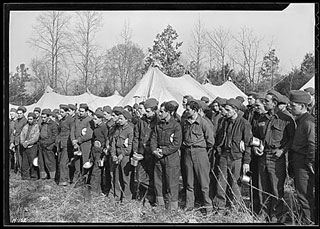
See the article in Knoxnews.com about the Civil War diary that UT-Knoxville Libraries has digitized. You can view the manuscript of the The Henry Pippitt Diaries - 1862-1865
at http://dlc.lib.utk.edu/pippitt/pippitt.html
Thursday, June 18, 2009
Monday, December 8, 2008
The State of the Union
Carlisle, Jennifer. "The State of the Union: A History of the Labor Movement at Vanderbilt University." Vanderbilt Undergraduate Research Journal [Online] Vol. 1, No. 0 (10 May 2005) Available: http://ejournals.library.vanderbilt.edu/vurj/viewarticle.php?id=7.
Abstract:
This article will document the historical context of the labor movement at Vanderbilt University in order to explain the nature and interaction of the labor union with central administration over the past forty years. Recognizing the lack of scholarly attention to the labor movement in Paul Conkin’s Gone with the Ivy (1985) and Peabody College (2002) and Dale Johnson’s Vanderbilt Divinity School (2001), the author contributes to the academic literature by providing a broad overview of the historical background and current state of the labor movement. As the largest employer in Davidson County and a major contributor to the state of Tennessee’s economic development, the relationship of University administrators and labor representatives has a large impact on the condition of surrounding labor movements, particularly in the city of Nashville’s low-wage service workers sector. In providing a brief chronological synopsis of the labor movement and the role of female involvement in the union, the author concludes by providing a context for contemporary labor negotiations.
Abstract:
This article will document the historical context of the labor movement at Vanderbilt University in order to explain the nature and interaction of the labor union with central administration over the past forty years. Recognizing the lack of scholarly attention to the labor movement in Paul Conkin’s Gone with the Ivy (1985) and Peabody College (2002) and Dale Johnson’s Vanderbilt Divinity School (2001), the author contributes to the academic literature by providing a broad overview of the historical background and current state of the labor movement. As the largest employer in Davidson County and a major contributor to the state of Tennessee’s economic development, the relationship of University administrators and labor representatives has a large impact on the condition of surrounding labor movements, particularly in the city of Nashville’s low-wage service workers sector. In providing a brief chronological synopsis of the labor movement and the role of female involvement in the union, the author concludes by providing a context for contemporary labor negotiations.
Expansionism, Slavery, and Sectionalism
Fotouhi, David. "Expansionism, Slavery, and Sectionalism: James K. Polk and American Enlargement under the Fluctuating Forces of Manifest Destiny." Vanderbilt Undergraduate Research Journal [Online] Vol. 2, No. 0 (12 August 2006) Available: http://ejournals.library.vanderbilt.edu/vurj/viewarticle.php?id=55.
Abstract:
This article explores the relationship between President James K. Polk’s progressive ambition in the national electorate and the geographic expansion of the United States, particularly with regard to the social and religious foundations for manifest destiny in the public conscience. The author finds that manifest destiny played a central role in President James K. Polk’s successful campaign for the White House as well as his handling of foreign and domestic affairs.
Abstract:
This article explores the relationship between President James K. Polk’s progressive ambition in the national electorate and the geographic expansion of the United States, particularly with regard to the social and religious foundations for manifest destiny in the public conscience. The author finds that manifest destiny played a central role in President James K. Polk’s successful campaign for the White House as well as his handling of foreign and domestic affairs.
They Moved the Earth
| Broderick IV, Thomas. "They Moved the Earth: The Slaves Who Built the Tennessee State Capitol." Vanderbilt Undergraduate Research Journal [Online] Vol. 4, No. 0 (3 June 2008) Available: http://ejournals.library.vanderbilt.edu/vurj/viewarticle.php?id=95. Abstract: By utilizing primary and secondary source material, this essay attempts to examine both the use of slavery during the construction of the Tennessee State Capitol and the lives of the slaves involved. Though written histories on the Capitol agree that slavery was used at the construction site, no further details are given. The goal of this essay is to bring to light the full story of the group of slaves that were involved in the construction. In the spring of 1846, fifteen slaves, all men, were loaned to the state government by A.G. Payne, a Nashville stone mason. For nearly a year they carved out the Capitol’s cellar, their skilled labor worth nearly twice as much as the unskilled labor of free men. These slaves broke through tons of limestone rock, carting it away after digging. When construction required skilled stonemasons, the slaves returned to their master’s properties. For fourteen years up until Payne’s death, they worked at both a farm and brick factory, the monotony briefly punctuated by being hired out. Due to debts incurred by Payne just before his death, the slaves were to be sold. The Civil War imminent, the slaves remained with Payne’s widow until their emancipation. After emancipation, the records on all but three of the men stop completely. Out of the three remaining men, the children of one were prospering. They had been taught to read. The government their father had helped physically build was finally working for their interests. |
Thursday, October 23, 2008
Political campaigns
Governor for All Tennessee, It Has to Be Dunn (Albert Gore Research Center)Have political campaigns changed? Check out the campaign brochures and letters in Volunteer Voices for a historical perspective.
See campaign brochures for Shelton Edwards (1948), Frank Clement (1952), John Bragg (1968), Bill Brock (1970), and Ben Hall McFarlin (1976). Correspondence also documents elections at the state and national levels. In one letter from 1884, Church Howe asks for O.P. Temple's help and advice in making Tennessee vote Republican.
Tuesday, May 20, 2008
Scopes Trial
Volunteer Voices includes music scores from the Center for Popular Music (MTSU), documents and photographs from the Tennessee State Library and Archives, as well as photographs from Bryan College and the University of Tennessee Libraries. View Scopes Trial items.Image caption: Monkey-Biznizz (Center for Popular Music, MTSU)
Learn more:
Scopes Trial (Tennessee Encyclopedia of History and Culture)
Monday, April 7, 2008
Rosenwald Schools
More than 5,300 Rosenwald schools and auxiliary buildings were constructed between 1912 and 1932. A recent article in USA Today, Partnership to preserve places of black opportunity
notes the historical significance of these schools. The article also highlights a joint initiative by National Trust for Historic Preservation and Lowe's to restore 17 Rosenwald schools, including two schools (Gallatin and Pikeville) in Tennessee.
Image credit: Ingram Rosenwald School (Tennessee State Library and Archives)
Early 20th Century Schoolhouses
(TeVA, Tennessee State Library and Archives) includes a selection of photographs of Rosenwald schools and other rural schools in Tennessee. Interested in learning more about Rosenwald schools? Check out Mary Hoffschwelle's book, The Rosenwald Schools of the American South (University Press of Florida, 2006).
notes the historical significance of these schools. The article also highlights a joint initiative by National Trust for Historic Preservation and Lowe's to restore 17 Rosenwald schools, including two schools (Gallatin and Pikeville) in Tennessee.
Image credit: Ingram Rosenwald School (Tennessee State Library and Archives)Early 20th Century Schoolhouses
(TeVA, Tennessee State Library and Archives) includes a selection of photographs of Rosenwald schools and other rural schools in Tennessee. Interested in learning more about Rosenwald schools? Check out Mary Hoffschwelle's book, The Rosenwald Schools of the American South (University Press of Florida, 2006).
Subscribe to:
Posts (Atom)